Thursday, 20 March 2014

Feathers in the Wind: 6 life lessons we can all learn from the rise and fall of Flappy Bird

By WILL SKIS


A few months after an inconspicuous entry into the Android and Apple app stores, the simple 2D platform game Flappy Bird became an international success, storming its way onto smartphones across the globe at the rate of millions of downloads a day.

Abruptly, however, the game disappeared from the digital marketplace, with creator Dong Nguyen announcing that the game’s success had become too overwhelming.

This left users such as myself (who had jumped on the flappy bandwagon during the height of its popularity) to be part of an exclusive club of those with a copy of the game on their devices. Moments after the game was pulled, smartphone owners flocked to eBay and other online auctioning sites in droves to sell their now ‘collector’s edition’ devices containing Flappy Bird.

This story is not particularly new or exclusive (the hubbub all happened over a month ago), or even that interesting (unless you are so addicted to this insane game that you crave anything with the word ‘flappy’ in it). However, to those who saw this brave little bird flap upwards into our collective consciousness, only to hit the inevitable green pipe of reality and come crashing down, I put this to you: there is definitely something worthwhile to be learned from this whole ordeal.

As such, here are six life lessons that I thought were worth taking from Flappy Bird, in no particular order. Enjoy, and flap on, my friends. Flap on.

1. Simple is better

You touch the screen to flap up, you don’t touch the screen and gravity sends you soaring back down. It’s that easy, and that difficult. The beauty of Flappy Bird lies within its simplicity, and it’s this simplicity that has made gamers red with rage and indie developers green with envy. The lesson is simple: Simple is better. We live in a world of noise and clutter, and the newly unlocked digital marketplaces and app stores are no exception. Flappy Bird was a rare minimalistic jewel in this world of $2.99 micro-transactions and inconveniently placed pop-up advertisements.

Hell, even the name ‘Flappy Bird’ is so insanely simple it permeates your brain almost instantly. Go ahead, say ‘flappy bird’ aloud right now. I bet you feel happy. ‘Flappy’ even rhymes with happy! It’s a fun word to say. And really, there’s no other name this game could ever have or need. It’s a flappy… bird. Flappy Bird. Simple!

2. Don't be afraid to borrow what works

Ok, let’s talk about the pipes. Whether intentionally or not, creator Dong Nguyen’s green pipes look a hell of a lot like another, side scrolling, globally beloved, plumber-saves-princess kind of game. These pipes, plus our hero Flappy, are pretty much all this game features (see point 1). Flap up, flap down, and don’t hit the pipes. Though they don’t contain secret dungeons filled with coins or Venus fly-traps, they are this game’s villain.


Outraged cries of plagiarism flooded the internet as this game became popular, but whether Dong wanted to borrow such a recognisable video game icon for his tiny little indie app or whether all pipes kind of look the same is a moot point. Seeing these pipes activated the working memory in our brains from the moment we all started flapping, and brought a sense of calming nostalgia which would ease the pain of playing the damn app all day and not making it past level 20. Call it an homage, call it a pastiche, a mockery, a travesty. Call it what you will; it works. And borrowing a little bit of what works from others you admire is what all of the greatest artists do anyway.
This, of course, leads us directly to the next piece of sage wisdom from the Flappy Bird saga, namely:

3. Success isn't always what you thought it would be


I could try to go into the detail of Flappy Bird’s ultimate demise, but YouTube comedian ‘chonnyday’ sums up the story quite nicely (and hilariously) in this video. (Warning: NSFW language.)


Watching the success of Flappy Bird piled upon this humble Vietnamese game developer, it is always wise to remember to plan an end goal for your creations. What was once a hobby and a dream career path quickly turned into a nightmare for Nguyen as he suffocated under the constant bombardment of media attention, greedy advertisers, indie developers looking to him like a guru, and of course, enraged fans who were feeling frustrated with their own motor skills.


Life constantly pressures us, to force us to want to be successful. However, if there’s anything to learn from Dong’s downfall, it’s that you have to be careful not to get overwhelmed when all that success comes in one fell swoop, much like an uncoordinated, pixelated bird would. This leads us to…

4. People will always want more even when you do a good job

People are perpetually unsatisfied. Couple this indisputable fact with the rise in wireless Internet, and the term ‘customer complaint’ has been well and truly taken to a whole new level. The opinions and rage, which were once relegated to a person’s co-workers or immediate family, can now be forcibly expelled into the great big world of social media in the forms of angry Tweets or YouTube comments, over private messages or public channels.

Another lesson poor Dong learned the hard way (and you, my dear reader, are learning the easy way – by reading this blog) was that people complain more than they praise. Way more. And even when they like what you put out there, they rarely voice their satisfaction in a healthy way (i.e. “Love your game, Dong! Do you think there could be a Flappy Bird mode where the pipes were further apart?”). It really is a terrible flaw in human behaviour. People usually only dream that a single person could make as much money, in as much time, with so simple a product, as Nguyen did with Flappy Bird. I have a superstition where I believe my bird flaps particularly well only when he is red in colour (it changes every game in a nice little visual touch.) I love this game, but I want to be able to pick Red Flappy on demand. And then I realise: “Who the hell am I to think I have any say with this app?”

When someone does succeed in this spectacularly individualistic, sky-rocketing manner, naturally our next question to them is: “What else you got?” (After a few hundred failed attempts at cracking our top score, of course). This immense pressure broke down Dong, but we can learn from it. Don’t let the fickle nature of humans, particularly 21st century consumer humans, get you down on your quest for the best.

Some good news, however, is that you as a content creator can use the next lesson against those same fickle, consumer robots.

5. People want what they can't have

The ridiculous eBay prices of devices with Flappy Bird installed and the shocking rate of clone ‘flappy’ apps appearing to fill a perceived gap in the market (a Flappy-App-Gap, perhaps?) makes very clear a life lesson I learned a long time ago from an episode of South Park, entitled ‘Cartmanland’.

In this episode, Cartman, the show’s sociopathic anti-hero, inherits $1 million and uses it to buy a financially struggling theme park, which he names after himself, boards up, and declares to everyone that no one is allowed in.


In turn, he unwittingly creates an insatiable demand for the theme park, for people now want to get in simply because they aren’t allowed to. This phenomenon is currently working in Dong’s favour, and has been working for the diamond industry for years. Use it cleverly, and it could be the most important life lesson on this list in terms of generating demand for your product, artwork, or service. People have accused Dong of restricting his app for this very reason, and, you know, they may be right…

6. Invent at the right moment

The final life lesson which I found poignant in the Flappy Bird saga is both uplifting and depressing at the same time (again, like Flappy Bird. What a timeless metaphor this little guy will be). Despite his simplicity, his borrowed icons, and his flawlessly frustrating gameplay, Dong’s real success came from his timing. Such an unlikely hero was the little bird, who probably never dreamed of living up to, let alone surpassing, the success of his cousin, the Angry Bird. But, like a feather in the wind, he was carried on a wave of hype straight into smart-phone superstardom. Timing, context, and luck are three variables which will make or break whatever you are trying to achieve in life, and unfortunately, you can rarely control them. 
Concocting something as viral and culturally permeating as Flappy Bird can only be a rare occurrence in our modern world, but it’s not unheard of. Take note of what others are creating, work on your own creations, and try your best to get the timing right when you want to show them to the world. You might just have a hit on your hands. 


Friday, 7 March 2014

Stilettos and Women's Liberation: What have they got in common?

Feminists were flat against them. Flappers were out to shake them. While Dior made them a household name. This International Women’s Day we trace the twentieth century woman’s stride to freedom and the shoes she wore along the way.


Who knew the well-trodden path to women’s liberation would follow the rise and fall of the high heel?

Stepping out

Comfortable, practical, and ready-for-duty heels stepped out on the very first International Women’s Day on March 19th, 1911. Over 30,000 women gathered at the largest street demonstration in Europe, joining thousands across the globe.

1925 Sears Catalogue (Source: flickr)
Following this chorus of confidence, the heel rose in stature to enhance the glamour of the Roaring ’20s. 

The high heel gave the illusion of longer and more slender legs. And a racy frock demanded a statement shoe. 
 

Heels at war

However, it couldn’t last. The captivating allure of the 1920s faded against the harsh realities of two World Wars and the Great Depression.


The high heel trend plummeted along with spirits to a more practical, low and wide heel. 


The heel revival

Post-war in the 1950s, good times were breaking through.  The high heel revival began again. Fashion designers like Christian Dior were going even higher with their first 5-inch stiletto heel.

It was a shaken, but battle-strong woman who stepped in to this new free world.

She’d gained her confidence and independence while the men were off to war. She had demanded her right to vote, fiercely fought by The Suffrage movement in most Western nations, and her traditional role in society was dramatically changing. 

The stomping 60s

Heel fashion, like the political and social state of the time, shifted significantly in the 60s and 70s. It was no longer about height and style, but about statement and freedom. And with that came the chunky platform shoe.


At the time, her role of mother and housewife was shrugged off for that of career woman. The introduction of the pill brought freedom to plan pregnancies and gain ‘control’ over her body and future. So women flooded universities and the workforce – in industries not previously broached – in fields of medicine, politics and business.

The rising trend

Manolo Blahnki Stilettos (Source: Vogue.com)
Designers like Manolo Blahnik brought back the sky-high stiletto in the 1980s and 90s.


The modern woman found stature and authority in her lofty heel. She fought for equality in the workforce, and challenged the traditional perceptions of her role and value across all levels of society.


The heel had earned its entitlement on catwalks, department store shelves, and then the wardrobe of every woman. She was confident. She was on her way.

The Heel Debate

Now I know what you’re thinking. It’s sexist to equate high heels and women’s liberation, right?

And you would be right, according to the views of the feminists of the 1960s and many still today.

Feminist groups were flat against it. Overly erotic or a form of ‘self-harm’, they saw heels as a male-invented shackle aimed to slow the progress towards women’s freedom, both literally and figuratively.

In the last 20 years, feminist views have receded – or indeed popular view has demonstrated acceptance – that the wearer of the heels does so for themselves, and not simply to appeal to the opposite sex.

So why is that one person’s view of the oppression from a patriarchal society, so vehemently opposed to someone else’s pursuit of personal expression?

I guess it’s because the feminist movement, or path to women’s liberation, is all about freedom of choice.

And women aren’t just women, they’re individuals. Individuals who have the freedom to walk-it-out in whatever they choose –stilettos, flip flops, sneakers – you name it, girlfriend.


Celebrating freedom

So, whether you’re liberating the flats or the heels from your wardrobe today, there’s much to celebrate as we approach International Women’s Day.

Since that first march for freedom in 1913, we’ve benefited from the patient tread of courage and determination by ordinary women that saw extraordinary progress, change and transformation.

While the debate continues about women in leadership and on boards, and the need to turn our efforts to ending poverty for the global poor wages on. I’m grateful to follow in the footsteps of those who’ve gone before me… and consider my swagger for those who’ll follow behind.

But it seems for now, the high heel – like women’s liberation – is here to stay.


International Women’s Day (IWD) is celebrated each year on the 8th of March. IWD is a global day celebrating the economic, political and social achievements of women in the past, present and future. For information and events:  https://unwomen.org.au/iwd/about-international-womens-day


By Kirryn Zerna 

Tuesday, 4 February 2014

What does your tone of voice say about you?

Now you listen to me, young lady!
What is your tone of voice saying about your company?
"Dear Maureen,
With the Spring ‘14 product update just around the corner, we want to make sure you're adequately informed regarding the coming changes." 

Adequately informed? Really? 
Thanks #Salesforce or as we (lovingly) call it Satanforce.

"February is the month of love and because we love you so much, we're adding one new integration every day this month." 

And that's how you do it folks.
That's #Zapier.

What does your tone of voice in your marketing communications say about  you?

Are you direct and friendly, informative and helpful or is your communication riddled with "adequate information"?

What's the worst example of marketing comms you have ever received?


Thursday, 16 January 2014

What you can learn from someone else's business disaster

A disaster for one suburban cafe is a learning opportunity for all small businesses, writes Maureen Shelley.

In leafy Lindfield, the day started well for Tablespoon cafe owner Scott. Breakfast business was brisk and the full complement of about 10 staff had turned up and were soon hard at work serving soft-boiled eggs with Turkish toast soldiers and pots of Earl Grey tea to anyone that asked.

Lindfield is on Sydney's leafy North Shore
Tablespoon is in Tryon Road, Lindfield on Sydney's North Shore. It's popular with business types, mums and kids and the grey-haired stay-at-homes who populate the area.
In the adjoining street Downer EDI were carrying out roadworks for Ku-Ring-Gai Council. The hum of machinery could be heard in the cafe but not at an uncomfortable level.
As The Copy Collective's COO I (Maureen Shelley) was hosting a small business MeetUp in the cafe, as I do every month. One of the attendees noticed the staff packing the chairs in the outside dining area.
A river of comment rippled through the restaurant and people started asking: "What's going on?"
In Tryon Road, the road workers had hit a Sydney Water main with their machinery and it had burst. The cafe had no water. There was no indication of when there would be water and Scott had decided to cut his losses and close early - just 2 1/2 hours into the day.
"We have no water," a waiter told the MeetUp members. "We can't do anything without water."
Another staff member went around offering the remaining diners the freshly-cooked scones to take home for free. Business owner Scott had told all the staff that they would be going home - on full pay, of course, because they hadn't any notice that they wouldn't be needed for a full shift.
Lindfield shopping village, corner of Tryon Rd
Not understanding that the water being turned off was accidental rather than planned, Scott was asked if he'd been given notice of the shut down.
"No," he said, "And none of the people in the street knows when the water will be back on.
"No one can tell me anything. I can't run the business like this."
He said that he did have "business disruption insurance" and that he'd be seeing if he could make a claim.
Tablespoon is open 7am to 5pm most days and operates seven days a week.
One customer (an experienced marketing strategist) estimated that, apart from loss of business revenue and reputation, the restaurant would have had to have paid $3,000 in wages for staff to go home and have a swim. Then there was the food that couldn't be kept for another day - such as the scones being handed around -  and the losses were starting to mount up.
No one can prevent these things - road workers burst water mains, heat waves keep people home, computers crash - random events can impact on any small business.
So, apart from having business disruption insurance like sensible Scott, what can you do to minimise the damage?
Sign at Tablespoon 16 January 2014
1. Have a plan
Thinking about the risks to your business before they happen can help. You may not need to ensure that your executives fly on different planes every time but would it hurt to implement it as a strategy?
2. Make sure everyone knows what the plan is
How often has your business paid expensive consultants to develop a business plan and then it has lain around collecting dust? Make the plan short and relevant. Keep it simple - maybe just 10 bullet points that address the most likely things that could hit your business - like computers crashing, the internet being down, the phones being cut off. Simple stuff but can you operate without them?
3. Take out the insurance and pay the premium
If disaster does strike, knowing that you have insurance to cover it can make the difference between your business surviving or going through a really tough time.
4. Look on the bright side - it might be a good thing
I spoke to a business owner who had a fire that destroyed her business premises. They had good insurance cover and she said to me: "It's actually quite scary how well we did out of the fire. Everyone was very sympathetic, our business was back up and running within six weeks, we were able to fix all the things that were wrong with the previous processing plant and the insurance company money really saved the day."

Thursday, 9 January 2014

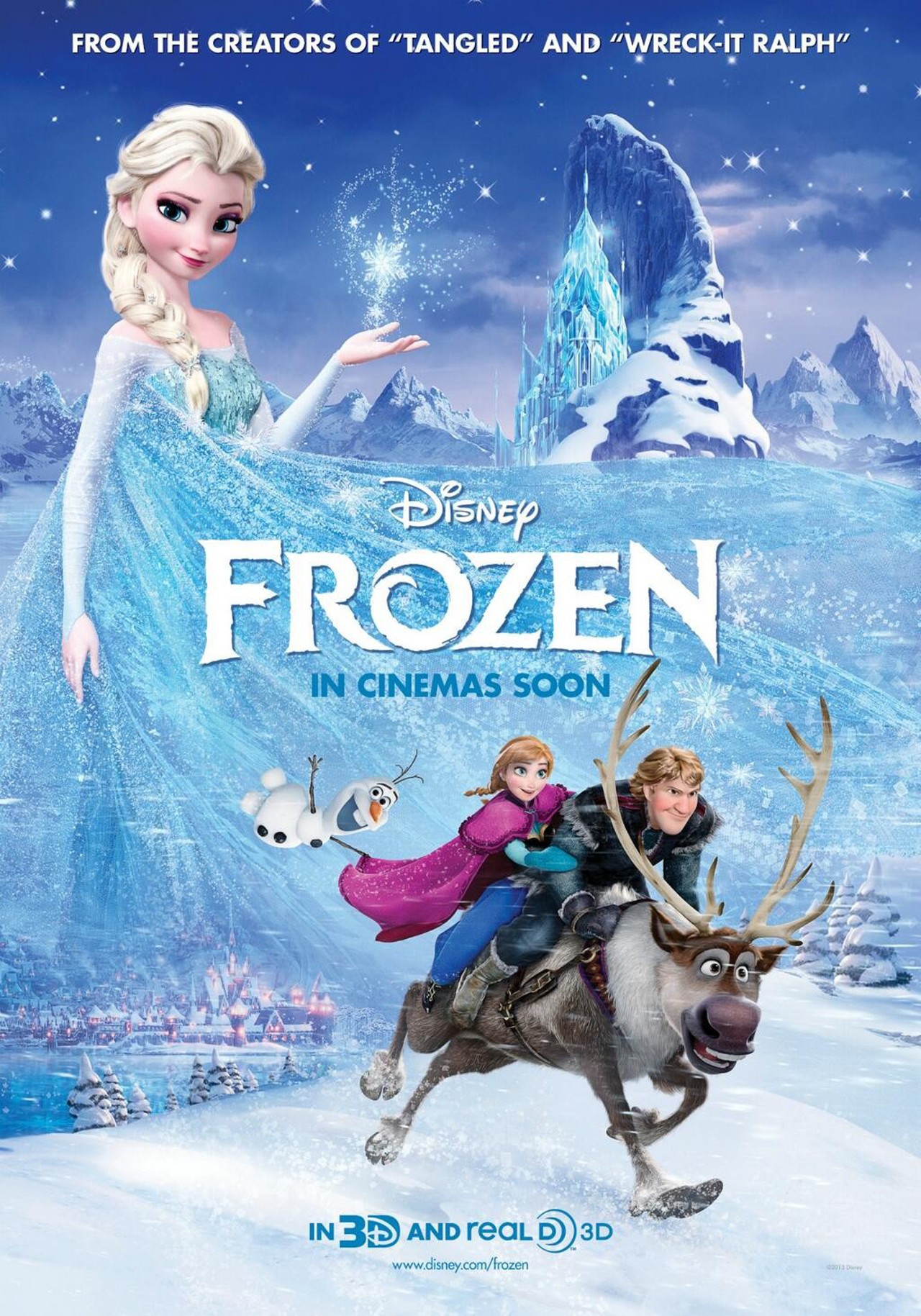
Disney, disability and Frozen

Frozen charts feminist territory and a the glimmer of a more enlightened view of people with disabilities for Disney writes Maureen Shelley.


Despite the singing (I lost it when the snowman started warbling a ballad to summertime), Frozen is a stand out in the Disney movie archives. The plot – loosely based on Hans Christian Anderson’s The Snow Queen – has two beautiful young princesses face the requisite number of obstacles before they discover the meaning of true love. So far, so Disney.
What’s different is that true love IS true love, the sisters are agents of their own destiny, the issue of disability is taken out and examined implicitly in a shockingly different way for Disney (more on   that later) and the plot is intricate, complex and engaging.

True love

For Disney true love has been, until this century, what we in the real world call infatuation or lust. In Frozen, true love turns out to be the love that two people have for each other and is based on years of relationship, shared memories, selflessness and self –sacrifice. It is based on more than a few hours of acquaintanceship or a single kiss. So not Disney.
Further, one of the beautiful princesses falls for a bad boy who is prepared to kill her and her sister to win a kingdom for himself. The princess sees the bad boy for what he is and doesn’t fall in love on the rebound. Disney, it seems, has lost the plots on which it has relied for about 90 years.

Feminism

Peg-Leg Pete threatens Mickey (C) Disney
Yes, these two princesses are beautiful, size 6, talented (singers at least) and privileged. Yet, in Frozen the young women get to do the rescuing as well as being rescued. They get to make decisions for themselves and implement them. They order people about and have their orders followed (I think that’s the princess bit but it’s a start). These women do more than stand around singing.
Although the animators at Disney still have foot-in-mouth disease where women are concerned (it’s hard to animate them, make them do things and keep them “pretty” said one), at least Frozen sheds a glimmer of light on the equality of the sexes in Disney. It doesn’t stretch to the women being plain, ordinary, lacking in privilege or, you know, with a job or anything but it is progress.

Disability

Frozen was shown in the session we attended with Get A Horse – a short cartoon based on old footage, reworked for the digital age. The villain in Get A Horse is Peg-Leg Pete. Pete’s name is a dead giveaway – he’s a person with a disability. He’s the only person with a disability in the cartoon and he’s the villain. He’s a pretty nasty character and he has Mickey Mouse (voiced by Walt himself) to contend with, so there are no prizes for guessing who wins the day. Mickey ensures that Peg-Leg Pete, who is a would-be thief, is repeatedly injured by taking advantage of his clumsiness that results from him only having one leg. Now, apart from the unsympathetic treatment of Pete, Get A Horse is a nasty little story, so we won’t dwell on it. However, it does show Disney’s (sometimes very unsympathetic) treatment of characters with disabilities.
Disney has depicted a range of characters with disabilities in Princess films over the years, namely
·         Seven men of short stature in Snow White (achondroplasia or dwarfism is a recognised disability)
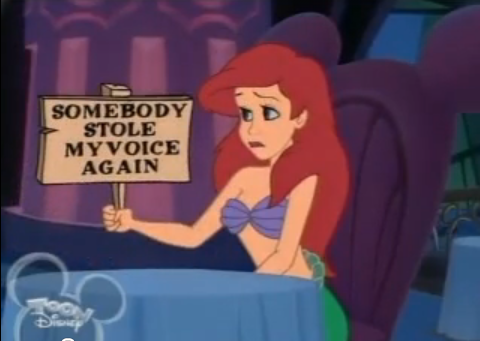
Ariel - The Little Mermaid (C) Disney
·         Ariel in Little Mermaid (at times she can’t walk and at others she can’t talk)
·         Aurora in Sleeping Beauty (she’s in a coma for much of the film and may have brain injury)
·         the Beast in Beauty and the Beast has a debilitating disease that causes dysmorphism or physical malformations
·         Pocahontas believes she can talk to animals, commune with spirits and understand unknown languages, which makes her a savant, possibly on the autism spectrum or she may be delusional
·         Cross-dressing Mulan is very clumsy and may be living with ataxia, a movement disability
·         Tiana in The Frog and The Princess believes she turns into an animal. This may be psychiatric therianthropy or delusions associated with schizophrenia.
·         Rapunzel in Tangled clearly had a form of polycystic ovarian syndrome that resulted in excessive hair growth
·         Merida’s mother Elinor from Tangled and her brothers Harris, Hubert and Hamish all turn into bears – a similar dilemma to Tiana in The Frog and The Princess. These may be just delusions created by drug abuse but they also may be symptoms of mental illness.
These disabilities are usually “inflicted” on the characters by a “wicked witch” or a “curse” and are often resolved (cured) at the end of the film by true love (a different form of magic).
Yet it is in Frozen that we see Elsa, the character with a disability that is both a “power” and a “curse”, as being the subject of two very different treatments as a result of her condition.
Elsa has a condition that makes things she touches become frozen, which can be a good thing – she can create ice castles in the air – and causes problems (she accidently puts ice into her sister’s brain).
Elsa the Good, (C) Disney
Her parents’ response is to lock her away, to not let anyone see her, to have her learn to control her emotions and to be a “good girl”. She and her family become very isolated.
It reminded me of how families with children with disabilities would put them in institutions, send them to special schools (we don’t see how Elsa was schooled) and generally cut them off from mainstream society. Both Elsa and her sister, Anna, suffer loneliness as a result of Elsa’s isolation – much in the way that families with members who had a disability did in the past.
Elsa runs away to the mountains and embraces her condition and the power it gives her. Interestingly, when she does so, she becomes much more womanly. She sheds her “good girl” clothes and walks with a wiggle; she creates a beautiful palace and becomes more queen-like.
However, she is even more isolated than when she was shut in a room by her parents. In her room she could talk through the door to her sister or the servants. In the ice palace, she is alone except for the snowman and a Yeti-like beast that she creates. Clearly, in the Disney cosmos, disability is a reason to isolate people in the most extreme way.
Anna, when she learns of Elsa’s “power” (curse) wants to investigate what can be done, she wants the condition out in the open and she wants to use relationship to address it.
It seems odd to me that Elsa’s parents don’t ever try to get help for her to learn to control her emotions (psychiatric treatment) so that she can manage her condition. They seek advice from a troll when she is a child but no further intervention is sought until she comes of age.
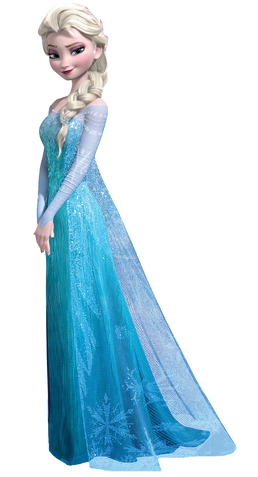
ElsaPose
Elsa - the Snow Queen (C) Disney

The intersection of sexuality and disability in Elsa’s life is like a double threat and echoes the experience of many women with a disability. The disability may be tolerated when they are children but when they become women the disability needs to be dealt with more strictly. In extreme situations (in real life) this has resulted in many women with intellectual disability being sterilised. In Elsa’s case, she has to run away to become a woman but is seen by some as a “monster”.
Anna works to get Elsa to return to the city so that it can be removed from the permanent winter she accidently created by letting her emotions loose. By Anna’s self-sacrifice – she takes an injury meant to kill Elsa – Elsa’s heart melts and she is now able to control her condition. She uses it to create beauty.
Through the self-sacrificing love of her sister, Elsa is able re-join society, live in the city and be crowned queen. She is no longer isolated, her condition is known to everyone and the people are indulgent of her and proud of the way she uses her power to create beauty.

However, Elsa doesn’t win the ultimate Disney prize that of a relationship with a man. Maybe, that is a stretch too far for even this new 21st century, Pixar-driven Disney universe.

Thursday, 26 December 2013

How to be a freelance writer people want to use again and again

The Copy Collective's Andrea O'Driscoll knows what it takes to be a good writer.
Be a shining light in the freelance world
Being a good freelancer isn’t just about being a good writer. Sure, having some talent is a great place to start, but there are a lot of gifted writers out there who barely make ends meet. Why? Too often it’s because they don’t have the rig
ht attitude. People don’t want to work with a tortured artist, they want to work with someone who is reliable, honest and professional.
So what exactly does that involve? Here are 10 tips for becoming the kind of freelance writer that everyone wants to work with.
1. Accept feedback
Repeat after me: feedback is my friend. It might not always be what you want to hear, but feedback will make you a better writer. Editors are busy people. If one has taken time out of his or her schedule to discuss your work, it’s a compliment, not a criticism.
2. Don’t take it personally
 Yes, I know you put your heart and soul into every word, but that doesn’t make every criticism a personal attack, or every rejection an insult. Editors make client-focused business decisions more often than they make personal digs.
3. Turn copy around
In other words, get the job done. It’s no good leaving half-written jobs languishing on your laptop while you wait for inspiration. You need to finish what you start.
4. Be available
This can be a tough one. Every freelance writer has a horror story or two about taking on too much or having to work through a family holiday. But the fact is if you turn down too many jobs, people will stop asking.
5. Do what you say
People need to know that you can be relied upon to deliver on your promises. Be a (wo)man of your word.
It’s not just about you. If you miss a deadline it affects everyone – designers, proofreaders, editors and (God forbid) clients. That’s not going to make you popular.
7. Be flexible
Everyone knows that things can change. It’s a fact of freelance life.
8. Your client has a client – so make them look good
You need to be on their team. If their client makes a last minute change, you need to help accommodate them. If asked, you need to say nice things. And of course you need to maintain consistently high standards.
9. You are precious, but don’t be precious
Once you’ve filed your copy, you need to cut the cord. If an editor decides to change ‘effervescent’ to ‘bubbly’ despite your careful word choice, let it go. They know what they want better than you do.
10. Ask questions, but accept the answer – even when you don’t like it

It’s good to ask questions, but not everything is open for debate. Once a decision has been made, accept it and move on.

Wednesday, 18 December 2013

What's on your mind?

How I learned to love crappy Facebook statuses


If you’re a regular user of Facebook, you scroll past inane statuses every day. Maybe in the last hour. It might have even been the last one you posted.

If not, you probably know the type. They usually serve no purpose but to alleviate the momentary boredom of someone who has picked up their phone or sat down at their computer. They say nothing, accomplish nothing, and nothing ever really comes of them.

So why are they there?

Recently, a Huffington Post article on this topic posited that: “A Facebook status is annoying if it primarily serves the author and does nothing positive for anyone reading it.” It then proceeded to outline seven different ways in which one could produce such insufferable cries for attention, basically describing my entire news feed.

We’ve gotten to a point where the instant affection and gratification received through Facebook comments and ‘Likes’ have become too sweet to resist. As people explore their own social media space in their own ways, the modern Facebook status can serve a variety of purposes other than simply updating our friends and family about our lives. It can often be a cry for attention, a passive-aggressive opinion, or perhaps an attempt at ‘image crafting’, a practice where we essentially run the PR campaign of our own life stories.

As 2013 hurtles inexorably forward and we start getting our 2014 party hats ready, we are posting the minutiae of our daily lives at unprecedented levels: photographing our food to humbly fish for love hearts on Instagram (throwing off all hint of pretentiousness with an off-beat hashtag in the caption); publicly crying out for attention with an anecdotal humble-brag regarding how we’ve handled a recent crisis; or simply pretending like our mundane afternoon of waiting on hold for three hours is hilarious to anyone – as long as it’s in the form of a passive-aggressive BitStrip.


The fact that ancient peoples never had the means to communicate information to each other at the rate that we modern folks do means the Great Pyramids of Giza, Angkor Wat, Stonehenge and the other great human-built structures of the Earth become a whole lot more impressive, if you really think about it. No ancient Egyptian slave got to gripe about his team’s cinderblock being particularly heavy on social media, even to release just a little bit of stress (or maybe try to score a ‘Like’ or two). It’s probably how the ancient civilisations actually got these monuments built; because those societies weren’t full of citizens pissing about on Facebook.

Though the stream of consciousness people provide when the status bar inquires ‘What’s on your mind?’ may seem at times like a symptom of an over-indulgent, narcissistic and insecure society programmed to behave based on an ever evolving user interface powered by code, then, let me tell you – oh wait, no, that’s actually what it is. Got it in one. However, the point of this blog post is that there is real, intransient, human truth behind the daily inanity of your newsfeed.

The Great Facebook Exodus


People often talk of ‘culling’ their Facebook friends list; removing people who post terribly dreary updates on their life, or people that they no longer associate with or talk to. Some even do the ‘reverse cull’, and leave the website altogether, removing themselves from everyone else’s’ lists.

A recent SMH article explored the growing trend of teenagers leaving for other forms of social media as the user base gradually becomes older with more over-30 users logging on. Just a few days ago, I was greeted by the below survey as I signed into Facebook.


Facebook is losing users, and it knows it. As this blog so eloquently puts it: “Speaking on a stage in front of a mixed audience of family, friends, and acquaintances makes it hard for most of us to be our genuine and authentic selves.”

This survey was an attempt to get me to rate what I wanted to see, but it already eerily knew what friends I interacted with, including who I Chat with (and *gasp* Poke) the most. So I wanted to see pretty much all the survey showed me, even when it was my friends being insufferably self-indulgent. I find in a vacuum, one piece of information, like a tweet or a status, doesn't really tell you about a person. Over a long enough timeline (no Facebook pun intended) a more complete picture starts to form.

For instance, if you Snapchat me a picture of a cup of tea, then I can pretty reasonably deduce that you are probably having a mind-numbingly boring day at work. You’re literally photographing your 3pm beverage to delude yourself into thinking that your Snapchat friends are going to want to see this slice of your day, because well, there’s probably nothing else to do.

But despite that Snap setting me back 10 seconds of my precious time (or less, depending on how long you’ve set it to), I like there is an inherent value in people openly volunteering to share this minute slice of their life with me, whether it be a Snap or a status or a Tweet or a text. It may be narcissistic, sure (‘Look at what a great/shit life I’m having!’) but it often contains deeper meaning about a person than they may have intended.

A window to your social circle's mind


Status exclaiming how excited for a particular event you are ("I’m going to Stereosonic in 4 days!") Like. Scroll down.

Status about the daily activities and momentous epiphanies a person’s child has. Usually a pretty generic epiphany that most people have. ("Little Billy worked out the fire was hot today! Kids, am I right!") Every twenty minutes. Usually accompanied with pictures. Like. Scroll down.

Status checking in at a swanky café in town with friends. (‘Super cute dinner date at the Ivy!’) Like. Scroll down.

Status about a political figure, artist or other such celebrity. Particularly if they died and their movies/music etc. were universally cool and liked. ("RIP Lou Reed. #notsuchaperfectday") Like. Scroll down.

Or, my personal favourite, the ‘indignant open letter’ status, addressed to someone that is never going to read it. (“Dear Arsehole who just splashed my new outfit with muddy water by driving through that puddle – thanks for ruining my job interview.”)

Technophobes often exclaim that this addiction to updating the world on the status of our lives is going to lead to the downfall of civilisation. You only have to walk into a nightclub (a place people ostensibly go to have fun and be social with each other) and gaze around at the throng of makeup-swathed faces being illuminated by the soft light of their smartphones amongst the din, to admit that there perhaps may be merit to this argument.

Digital ‘Likes’ are validation in its purest form. I know I love receiving them. They, retweets, saved snapchats, and polite comments on my Facebook status provide the self-esteem nourishment no parent could hope to provide. (Sorry Mum. Raising and feeding me for 18 years was pretty swell too.) As I have matured along with social media, however, and seen how others use it to connect with the social universe around them, I have come to understand how all the various platforms to share your voice come with one striking similarity: from your perspective, YOU are always at the centre of every interaction. Just like life. And like life, these sites come with a confirmation bias. We present ourselves in the manner in which we see ourselves, and as such getting digitally ‘rewarded’ for being us encourages these behaviours, in turn encouraging us to share more and more with one another.

In our brave new world, we all tend to drown our minds - emotions, thoughts, worries, little wins, conversations we had or want to have and much more - we drown all of it in manufactured emotions (social media, games, TV) which contain interesting, and valuable, but ultimately unnecessary information. The human connection, the stuff behind the status, is still important. It is a human typing a way at those keys, or snapping away at that camera. A fragile, complex, multi-faceted individual human with an almost infinite spectrum of thoughts, beliefs and behaviours. We all wear masks, and social media is just our digital mask -- a self-edited life story.

This blog is not meant to discount or discourage ‘true’ human interaction. When you are physically present with another person, it requires an immediacy of thought or action that communication through Facebook etc. filters out (even though people can see when you’ve ‘seen’ a chat message now). Human contact, even if being in a room with someone requires body language and tonality, even if it is harder to engage all 5 of your reflexive senses at once, is still a billion times better than the detachedness of modern social media communication. It still is. It might not seem like it, but it is. In our new world of millions of light-speed communication connections flying around, try to remember that beneath the inanity, there lies a person who, much like yourself, is trying to navigate around this complex three-dimensional universe full of people and passions and ideals without going insane. And, well, if that doesn’t deserve a ‘Like’, then I don’t know what does.

By WILL SKIS